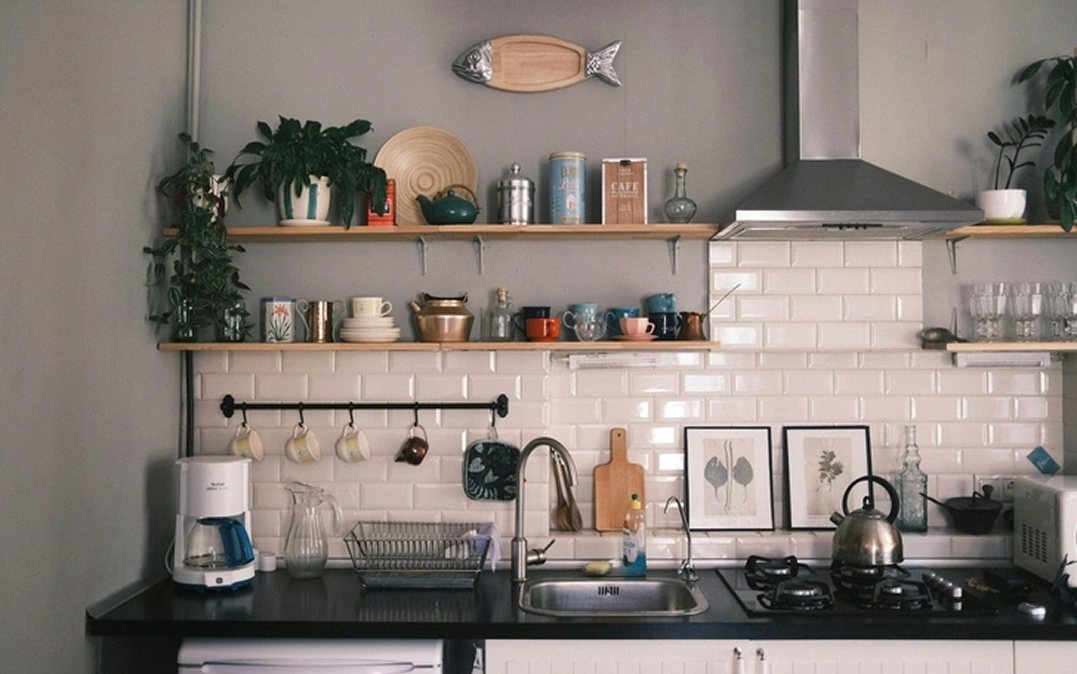
Surface clutter vs storage clutter
Clutter is often associated with hidden storage spaces being overfilled. Open surface clutter differs: it is immediately visible and impacts daily routines.
Advertisement
This has unique implications:
-
Quick-access surfaces can interfere with workflow (kitchen prep, office tasks).
-
Visual clutter increases decision fatigue, as the brain constantly evaluates the environment.
-
The surface may appear disorderly even when underlying systems (drawers, shelves) are functional.
Ironically, striving for “clear surfaces” without considering function often worsens efficiency rather than improving it.
The role of task friction
Every time a surface is used as temporary storage, it introduces friction in subsequent tasks:
-
Searching for a specific item among miscellaneous objects
-
Reorganising items before beginning a new activity
-
Cleaning or clearing space before another use
Even small repeated delays accumulate, producing measurable time and mental strain over a week.
Why some surfaces attract more clutter
Certain factors make surfaces more vulnerable:
-
Accessibility – The easier it is to place an item, the more likely it is to stay there.
-
Proximity to transitions – Near doors, entrances, or workspaces, surfaces serve as natural “drop zones.”
-
Undefined purpose – Surfaces without a clearly assigned function tend to accumulate miscellaneous items.
In UK homes with compact layouts, high traffic areas are especially prone to clutter accumulation due to frequent use and limited storage options.
The psychological loop of open surfaces
Open surfaces create a feedback loop:
-
Items are placed “just for now.”
-
The brain notices them constantly, increasing mental tension.
-
Efforts to clear or organise are incomplete.
-
More items accumulate as temporary deposits.
Over time, the surface loses its original function and becomes a persistent visual and functional burden.
Strategies to prevent surface clutter
-
Assign a purpose to every surface
Each surface should have a primary function: prep, work, or display. Surfaces without a clear purpose invite random deposits. -
Create small, defined zones
Use trays, boxes, or containers to create temporary holding zones for high-use items. This contains clutter visually and physically. -
Enforce regular reset routines
Schedule short daily or weekly periods to clear and reorganise surfaces. Habitual reset prevents accumulation. -
Limit temporary deposits
Avoid the habit of placing items “just for now.” Instead, assign an immediate destination whenever possible. -
Balance visibility and accessibility
Keep essential items in sight but within defined zones. Out-of-sight storage is preferable for low-frequency items to reduce cognitive load.
Cultural context in the UK
In many UK homes, open surfaces are celebrated in interior design media and social norms. Minimalism and visual clarity are highly valued.
This creates a conflict: homeowners aim for aesthetics but maintain functional routines that demand temporary placement of items. The tension between appearance and utility is a primary driver of clutter on open surfaces.
Conclusion
Open surfaces are deceptively simple: they look clean but invite clutter when function and behaviour are not considered. Their very accessibility makes them natural magnets for items in transition, increasing cognitive load, friction, and stress.
The solution is not to eliminate open surfaces entirely, but to structure them. Clear function, defined zones, and disciplined reset habits transform surfaces from clutter magnets into useful, manageable areas.
By aligning visibility with purpose, it is possible to maintain both the aesthetic and functional order of a home, reducing the stress hidden in plain sight.